Hi! Ask me about StudyONsende (features, packages, prices, setup) or about the demo studio in the live demo: its timetable, instructors and packages. For example: "What is included in the web + mobile package?"
Answered by AI and may be wrong; book on the class page. Your question is sent to Anthropic (USA) to generate the answer. So we can get back to you, the chat is shared with our team and stored; you can ask us to delete it. Sharing contact details is optional; do not share health details.
Privacy
Gain strength and flexibility by practicing a specific sequence of postures dynamically and with discipline.
What is Ashtanga Yoga?
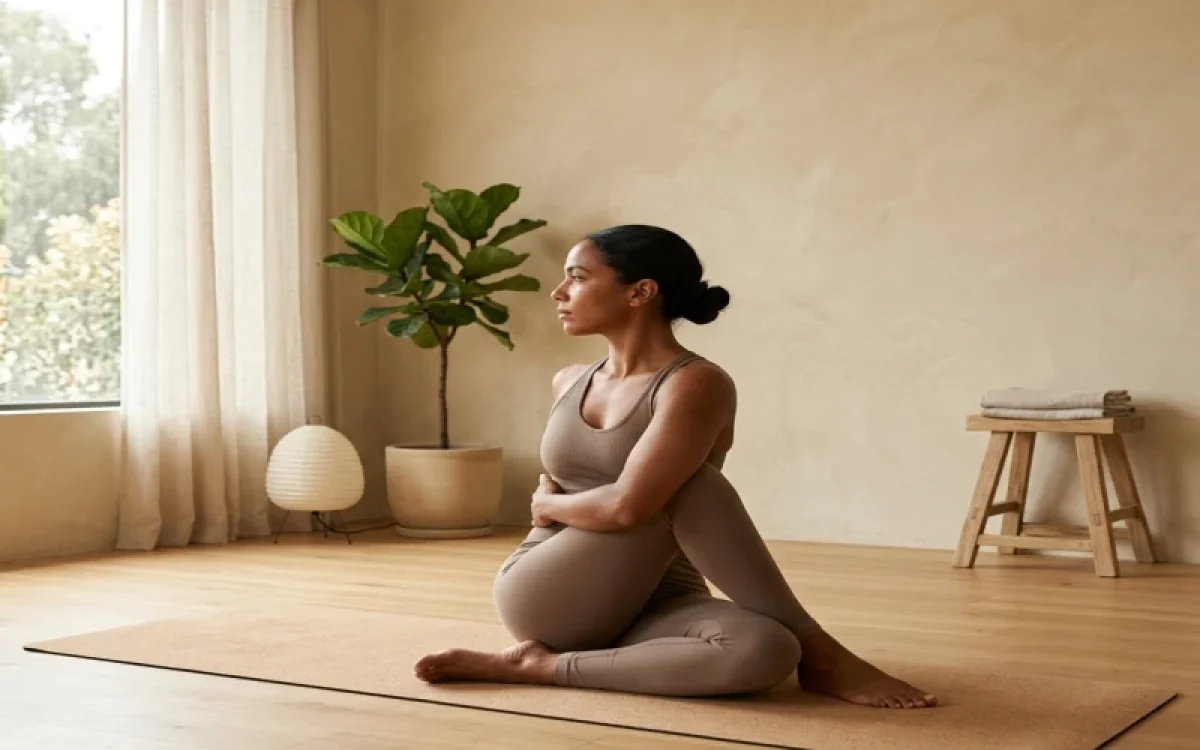
Ashtanga yoga is a disciplined, dynamic style of yoga in which a set series of postures is practiced in the same order every time, with breath and movement synchronized. It was systematized by K. Pattabhi Jois in Mysore, India, in the 20th century and later spread widely in the West. The name comes from the "eight-limbed" path of yoga described in Patanjali's Yoga Sutras.
Three elements sit at the heart of the practice: ujjayi breathing, bandhas (muscle engagements often described as energy locks), and drishti (gaze point). The primary series includes sun salutations, standing poses, seated forward folds, twists, and a closing sequence. This is an advanced class that requires a solid yoga foundation and good fitness.
Who is it for?
Advanced students: Comfortable with chaturanga, downward-facing dog, and basic inversions.
People who want structure: Repeating the same series makes progress easy to see.
Anyone who likes a challenge: A practice that demands physical and mental endurance.
Vinyasa practitioners: A chance to explore where flow yoga comes from.
Home practitioners: Learning the series lets you practice on your own.
A note for beginners: Hatha or foundational Vinyasa classes are recommended first to prepare for Ashtanga.
Which muscles does it work?
Which muscles does Ashtanga yoga work? Because the series demands both strength and flexibility, almost the whole body is engaged.
Rectus abdominis and transversus abdominis (abs and deep core): Work hard in jump-throughs and boat pose (navasana).
Pectoralis major, triceps, and deltoids (chest, back of the arms, and shoulders): Carry body weight in vinyasa transitions and arm balances.
Serratus anterior (around the shoulder blades): Stabilizes the shoulders in plank and arm-supported poses.
Hamstrings (back of the thighs): Stretched significantly in seated forward folds.
Iliopsoas and gluteals (hip flexors and glutes): Gain strength and flexibility in standing poses and hip openers.
Pelvic floor muscles: Consciously engaged through mula bandha.
Benefits
Key benefits of Ashtanga yoga with regular practice:
Strength: Repeated transitions may help build upper body and core strength.
Flexibility: Forward folds and twists throughout the series support range of motion.
Endurance: 75 minutes of continuous practice can support cardiovascular fitness.
Focus: A set sequence, gaze points, and counted breaths help anchor the mind.
Visible progress: Repeating the same series lets you track your development clearly.
Discipline: Regular repetition can build self-discipline and patience.
Stress management: Research associates regular yoga practice with lower perceived stress.
What happens in a class?
A 75-minute Ashtanga class follows the traditional order of the primary series. The instructor leads with a breath count and suggests shortened or adapted versions where needed.
Opening (5 minutes): An opening chant or a brief breath focus.
Sun salutations (10 minutes): Surya Namaskara A and B, several rounds each.
Standing and seated series (45 minutes): Standing poses, then seated forward folds, twists, and hip openers.
Closing sequence and rest (15 minutes): Shoulder stand and related poses, lotus variations, and savasana.
Safety tips and things to watch
Don't force the series: If you're not ready for a pose, use the variation your instructor suggests; progress in the traditional method is gradual.
Protect your knees: Never force lotus or half lotus; the rotation should come from the hips.
Shoulder health: There are many chaturangas; keep elbows close to your body and drop your knees when tired.
Inversions: Use a folded blanket in shoulder stand to keep load off your neck; skip this section if you have neck problems.
Keep breathing: If your breath speeds up, slow down or rest in child's pose.
Check with your doctor first: If you have cardiovascular disease, high blood pressure, glaucoma, a neck or lower back disc problem, a joint injury, recent surgery, or are pregnant, talk to your doctor before starting.
Tell your instructor: Share any injuries before class.
How to prepare
Food: Traditionally practiced on an empty stomach; finish heavy meals at least 2–3 hours before.
Clothing: Fitted, sweat-friendly clothes and leggings that don't slip.
Water and towel: You may sweat a lot, so bring both.
Preparation: Knowing sun salutations A and B before your first class makes it easier to follow the flow.
Frequently asked questions
Is Ashtanga yoga suitable for beginners?
This class is advanced. If you're just starting out, learn the basic poses and breathing in Hatha and Vinyasa classes first, then move on to Ashtanga.
Can Ashtanga help with weight loss?
Ashtanga is physically demanding and can increase energy expenditure. Weight management, however, should be considered together with nutrition, sleep, and overall lifestyle.
What does Mysore style mean?
In Mysore style, each student practices the series at their own pace while the instructor gives individual adjustments. This class is a led class, guided by the instructor's breath count.
How often should I practice?
The traditional method suggests six days a week, but for most people two to three classes a week is a realistic, sustainable start. Rest days are part of recovery.
We use required cookies to keep the site working. With your permission, Google Analytics and YouTube help us measure site usage and display external media. Read our Cookie Policy.