Hi! Ask me about StudyONsende (features, packages, prices, setup) or about the demo studio in the live demo: its timetable, instructors and packages. For example: "What is included in the web + mobile package?"
Answered by AI and may be wrong; book on the class page. Your question is sent to Anthropic (USA) to generate the answer. So we can get back to you, the chat is shared with our team and stored; you can ask us to delete it. Sharing contact details is optional; do not share health details.
Privacy
A class that develops children's imagination, flexibility, and body awareness through fun games and stories.
What is Kids Yoga?
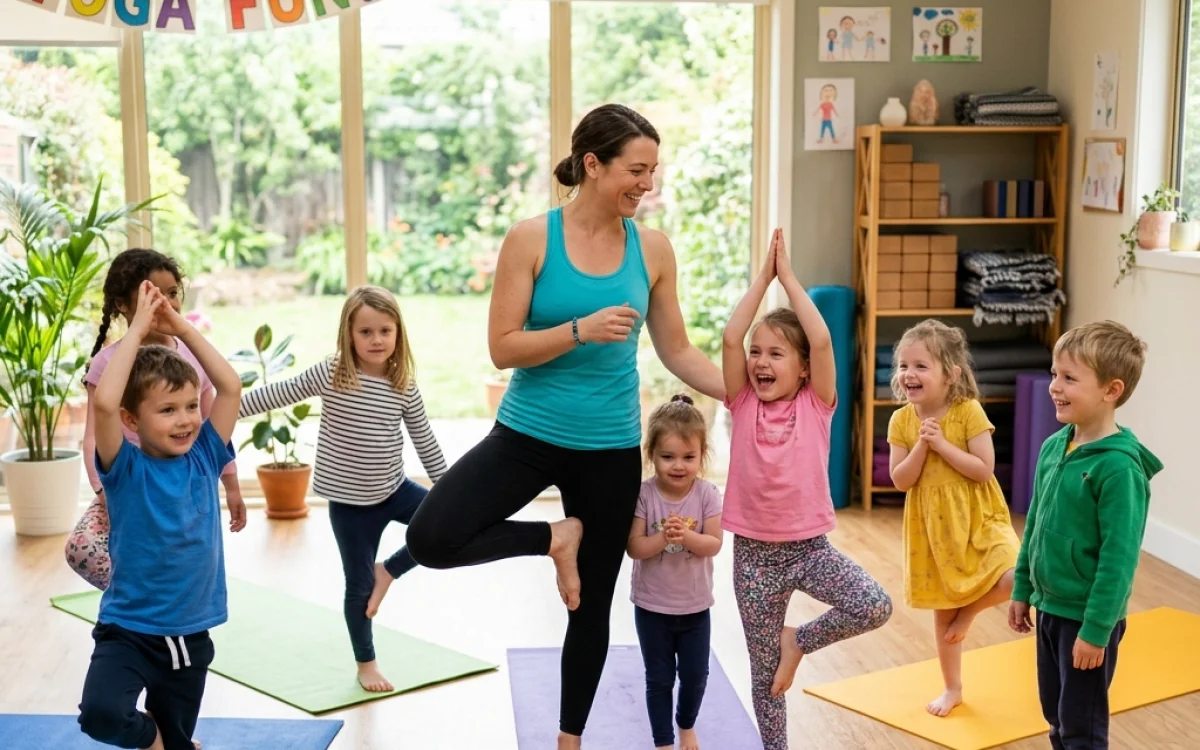
Kids yoga is a developmentally appropriate yoga practice that blends poses, breathing, and relaxation with games, stories, and songs. Poses are usually taught through animal and nature images: children stretch like a cat, balance like a tree, and breathe out like a lion.
The 45-minute class is beginner level, and the recommended age range is about 4–12, with groups formed by similar ages when possible. The focus is not on perfect poses but on the joy of moving, body awareness, taking turns, and learning to calm down.
Who is it for?
Children aged 4–12: The play-based format adapts to attention span and motor development.
Kids with no yoga experience: Kids yoga for beginners requires no prior knowledge.
Active, energetic kids: It gives them a structured way to use energy, then practice settling down.
Shy or less competitive kids: With no winners or losers, they can join at their own pace.
Kids who spend a lot of time on screens: It adds variety in posture and movement.
Parents who want calming skills for their child: Simple breathing tools can be used at home too.
Which muscles does it work?
Which muscles does kids yoga work? It uses the whole growing body in a balanced, playful way:
Core and back muscles (rectus abdominis and erector spinae): Boat, cat-cow, and table poses support trunk strength and upright posture.
Quadriceps and hamstrings (front and back thighs): Worked in chair and warrior poses and jumping games.
Gluteus maximus (glutes): Activated in bridge and squat poses.
Foot and ankle muscles: Balance poses like tree and flamingo train the soles and ankle stability.
Deltoids and triceps (shoulders and back of the arms): Strengthened by weight-bearing moves like dog pose and bear walks.
Diaphragm (main breathing muscle): Trained with games like balloon breath and smelling the flower.
Benefits
Research links kids yoga especially with self-regulation and body awareness. The benefits of kids yoga include:
Motor skills: May support balance, coordination, and strength.
Flexibility: Gentle, age-appropriate stretches can help maintain range of motion.
Emotional regulation: Simple breathing can help kids calm down when angry or overexcited.
Attention and focus: Short balance and quiet games may support attention span.
Body awareness: Kids learn to notice and name their body's signals.
Confidence: Mastering a new pose without competition can build self-esteem.
Social skills: Partner and group games encourage cooperation and taking turns.
What happens in a class?
The 45-minute class starts with a short greeting and an active warm-up chosen to match the group's energy that day. In the main part, poses are woven into a story or theme, and class ends with a brief relaxation and quiet moment.
Warm-up (8 min): Greeting, animal walks, and light jumps.
Story flow (20 min): For example, a "forest journey" with tree, butterfly, lion, and snake poses.
Games and partner work (10 min): Balance games, mirror game, and breathing games.
Closing (7 min): Lying down to relax, a short guided imagination journey, and a calm goodbye.
Safety tips and things to watch
No forcing: Kids do poses within their comfort zone; the instructor never pushes them physically.
Share health information: If your child has asthma, epilepsy, a heart condition, or a recent injury or surgery, check with their doctor first and let the instructor know.
Careful with inversions: Poses that load the head and neck, such as headstands, are not done in kids classes.
No breath holding: Breathing games always use easy, natural breath; no breath retention or fast breathing.
Safe space: Mats are spaced well apart, and jumping games happen on non-slip floors.
Rest and water: When a child says they are tired, they rest; water breaks are given.
Parent communication: Share your child's special needs, worries, or sensitivities with the instructor before class.
How to prepare
Dress your child in comfortable, stretchy clothes; sweatpants and a T-shirt work better than dresses or jeans.
Kids can practice barefoot or in grip socks.
A light snack about an hour before class is enough; avoid a full stomach.
Bring a water bottle and tie back long hair.
Arriving a few minutes early for the first class helps your child settle in.
Frequently asked questions
At what age can kids start yoga?
The recommended range for group classes is about 4–12. Children under four usually do better in parent-and-child classes.
Can parents stay in class?
Staying briefly during the first classes may be possible, depending on how your child settles in. Kids usually focus better and gain more independence when they join on their own.
My child cannot sit still. Is yoga right for them?
Yes. Kids yoga is built on movement and play, and calming down is taught in small, short steps.
How often should my child attend?
One or two classes a week is an enjoyable, sustainable rhythm for most kids. Regular attendance makes it easier to bring breathing games into daily life.
We use required cookies to keep the site working. With your permission, Google Analytics and YouTube help us measure site usage and display external media. Read our Cookie Policy.