Hi! Ask me about StudyONsende (features, packages, prices, setup) or about the demo studio in the live demo: its timetable, instructors and packages. For example: "What is included in the web + mobile package?"
Answered by AI and may be wrong; book on the class page. Your question is sent to Anthropic (USA) to generate the answer. So we can get back to you, the chat is shared with our team and stored; you can ask us to delete it. Sharing contact details is optional; do not share health details.
Privacy
Safe and preparatory exercises for childbirth, ensuring future mothers have a comfortable pregnancy.
What is Prenatal Yoga?
Prenatal yoga is a yoga practice for expectant mothers that combines poses, breathing, and relaxation adapted to the changing body during pregnancy. It builds on classic hatha yoga, but movements that compress the belly, overchallenge balance, or keep you on your back for long are removed or swapped for safe alternatives.
Class focuses on gentle mobility, leg and hip strength, pelvic floor awareness, and calm breathing that may also help during labor. The 60-minute class is beginner-friendly. The goal is not performance but listening to your body and feeling more at ease during pregnancy.
Who is it for?
Expectant mothers cleared by a doctor or midwife: In uncomplicated pregnancies, starting in the second trimester is commonly recommended.
People new to yoga: Prenatal yoga for beginners teaches the basics step by step, with props.
Anyone with back or hip tension: Gentle stretching and mobility may help you feel more comfortable.
Those preparing for birth: Breath awareness and relaxation can support you through the process.
Anyone who wants to stay active: It offers structured, low-intensity movement.
Those who want to meet other parents-to-be: The group creates a warm space to share experiences.
Which muscles does it work?
Which muscles does prenatal yoga work? Mainly those that carry the load of pregnancy and support posture:
Gluteus maximus and medius (glutes): Strengthened in standing poses and bridges; they help stabilize the pelvis.
Quadriceps (front thighs) and hamstrings (back thighs): Engaged in squats and warrior poses to carry increasing weight.
Pelvic floor muscles: Trained with breath-linked engaging and releasing; learning to relax them matters too.
Erector spinae (back muscles): Mobilized with cat-cow; they support posture as your center of gravity shifts.
Diaphragm (main breathing muscle): Active in slow, deep breathing.
Transversus abdominis (deep core): Gently activated with the breath; no crunches.
Rhomboids (shoulder blade muscles): Worked through chest openers that counter rounded shoulders.
Benefits
Research generally links the benefits of prenatal yoga with well-being and relaxation:
Back comfort: Mobility and posture work may help ease common lower back tension.
Stress management: Slow breathing and relaxation can help reduce anxiety.
Sleep quality: Gentle movement and breathing may support more restful sleep.
Birth preparation: Steadying the breath and releasing tension are tools you can use in labor.
Balance and body awareness: It can make adapting to a shifting center of gravity easier.
Leg and hip strength: Supports everyday movement later in pregnancy.
Community: Being with people going through the same thing can ease isolation.
What happens in a class?
Class opens with a short check-in where the instructor asks how far along you are and how you feel, and suggestions are tailored to your trimester. Then comes seated breathing and a light warm-up, supported standing poses, and side-lying relaxation to close.
Warm-up (10 min): Seated breathing, neck, shoulder, and wrist movements.
Mobility (10 min): Cat-cow on hands and knees and hip circles.
Main section (25 min): Wall- or chair-supported warrior, wide squat, and side stretches.
Breathwork (5 min): Long exhales and pelvic floor awareness.
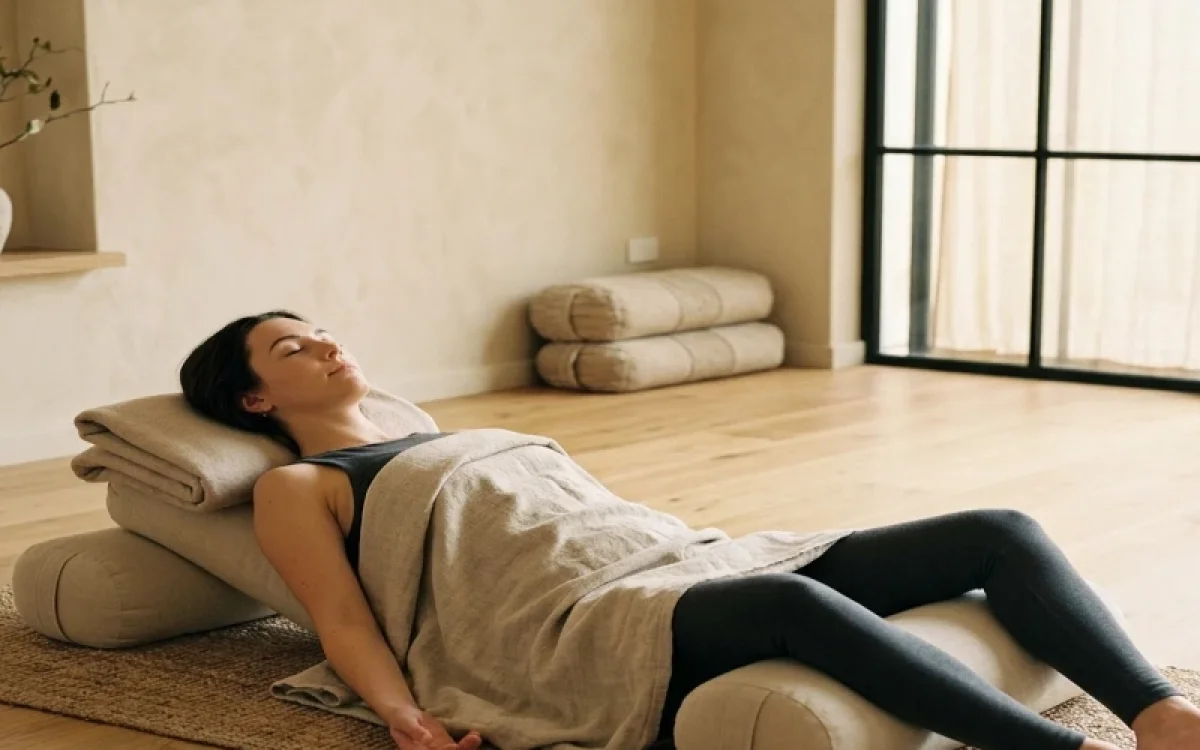
Closing (10 min): Relaxation on your left side, supported by bolsters.
Safety tips and things to watch
Talk to your doctor or midwife first: With placenta previa, preterm labor risk, preeclampsia, bleeding, high blood pressure, or a cerclage, always get clearance before starting.
Adapt to your trimester: The first trimester stays gentle for nausea and fatigue; the third uses extra support for balance.
Avoid lying on your back for long: After the second trimester, this is kept short or replaced with side-lying.
Do not compress your belly: No lying on your stomach, deep twists, or ab-straining exercises.
Avoid overheating: Skip hot rooms, drink water, and keep your breath easy enough to talk.
Do not overstretch: The hormone relaxin can loosen joints; stay short of your limit.
Do not hold your breath: Breath retention and fast breathing are not used.
Stop right away: If you feel dizziness, bleeding, pain, fluid leakage, or contractions, stop and contact your doctor.
How to prepare
Wear stretchy clothes that do not squeeze your belly; practice barefoot or in grip socks.
Bring water and take small sips.
Eat a light meal 1–2 hours before; do not arrive hungry.
Tell the instructor how many weeks along you are and about any conditions.
Frequently asked questions
When can I start prenatal yoga?
Starting around weeks 12 to 14 is commonly recommended. Every pregnancy is different, so get clearance from your doctor or midwife first.
I have never done yoga. Can I join?
Yes. The class is beginner-friendly and every pose can be simplified with props. No flexibility is required.
How often should I practice?
One to three classes a week is a sustainable start for most expectant mothers. Do less if your energy is low, or add short breathing practices at home.
Can I keep going until my due date?
Unless your doctor advises otherwise, many continue until the final weeks. In the third trimester, poses get gentler and relaxation gets more time.
We use required cookies to keep the site working. With your permission, Google Analytics and YouTube help us measure site usage and display external media. Read our Cookie Policy.