Hi! Ask me about StudyONsende (features, packages, prices, setup) or about the demo studio in the live demo: its timetable, instructors and packages. For example: "What is included in the web + mobile package?"
Answered by AI and may be wrong; book on the class page. Your question is sent to Anthropic (USA) to generate the answer. So we can get back to you, the chat is shared with our team and stored; you can ask us to delete it. Sharing contact details is optional; do not share health details.
Privacy
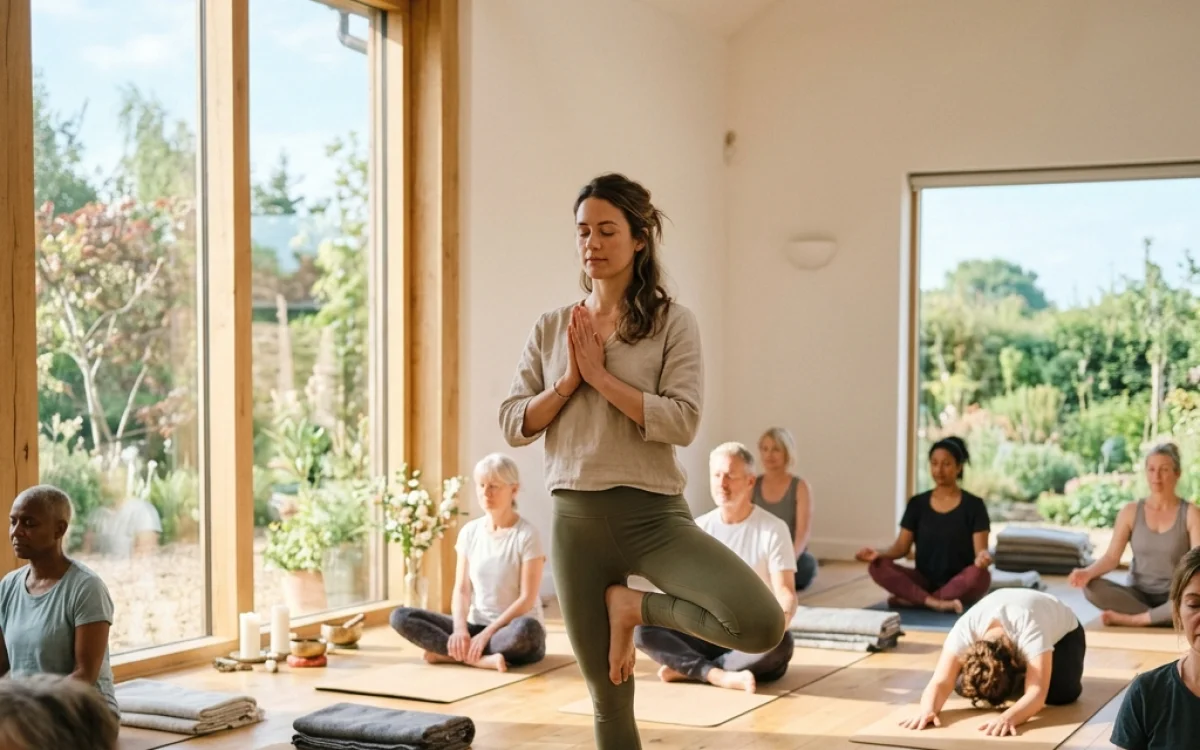
Balance your body and mind with classic postures, alignment, and breathing practices.
What is Hatha Yoga?
Hatha yoga is a classic, accessible style of yoga that combines physical postures (asanas), breathing exercises (pranayama), and relaxation at a steady, balanced pace. Its roots go back to medieval yoga texts from India, and it is the foundation of many styles practiced in the West today.
Poses are usually held for several breaths, and the instructor explains how to build each one step by step. The focus is on awareness, alignment, and linking breath with movement rather than speed. That is why Hatha is often recommended as yoga for beginners, while experienced students use it to strengthen their foundations.
Who is it for?
Beginners: Learn the basic poses slowly, with clear explanations.
All levels: The instructor offers easier and more challenging variations of each pose.
People with desk jobs: Helps ease shoulder, neck, and lower back tension from long hours of sitting.
Anyone wanting more flexibility: You don't need to be flexible to start; it develops with practice.
People looking for stress support: The calm pace and breath focus can help you step away from a busy day.
Active people: A good complement to running, cycling, or strength training through mobility and balance work.
Which muscles does it work?
Which muscles does Hatha yoga work? A well-rounded class covers the whole body.
Rectus abdominis and transversus abdominis (abs and deep core): Stabilize the torso in standing balances and plank.
Erector spinae (back muscles): Strengthen in backbends like cobra and locust, and lengthen in forward folds.
Quadriceps and hamstrings (front and back thighs): The front leg works in warrior poses; forward folds stretch the hamstrings.
Gluteus maximus and medius (glutes): Stabilize hips and knees in bridge and standing balances.
Deltoids and trapezius (shoulders and upper back): Build endurance with arms overhead or in downward-facing dog.
Diaphragm and intercostals (breathing muscles): Learn to work more efficiently through conscious breathing.
Benefits
The benefits of Hatha yoga build with regular practice and show up at a different pace for everyone.
Flexibility: May help increase range of motion in the hips, hamstrings, and shoulders.
Strength and endurance: Holding poses is balanced bodyweight training.
Balance and coordination: One-legged poses support a better sense of balance.
Posture awareness: Attention to spinal alignment helps you notice how you sit and stand.
Stress management: Research associates regular yoga practice with lower perceived stress.
Breath awareness: Slow, deep breathing can support a calmer state.
What happens in a class?
A 60-minute Hatha class prepares the body gradually and ends with calm relaxation. The instructor describes each posture and suggests props such as blocks, straps, or blankets when helpful.
Arrival and breath (5–10 minutes): Seated breathing to settle in.
Warm-up (10 minutes): Spinal movements, cat-cow, and gentle joint mobility.
Main section (30–35 minutes): Standing poses, balances, forward folds, backbends, side stretches, and twists.
Closing (10 minutes): Floor stretches and full relaxation on your back (savasana).
Safety tips and things to watch
Listen to your body: Stretching sensations are normal; sharp, stabbing, or electric pain means come out of the pose.
Keep breathing: If your breath flows even in a challenging pose, you're likely at the right intensity.
Prioritize alignment: Knees over ankles and a neutral lower back matter more than going deeper.
Use props: Blocks and straps are tools for good alignment, not shortcuts.
Tell your instructor: Mention injuries, surgeries, or chronic pain before class.
Check with your doctor first: If you have high blood pressure, glaucoma, a herniated disc, recent surgery, pregnancy, or significant joint problems, talk to your doctor before starting.
How to prepare
Clothing: Breathable clothes you can move in freely; yoga is practiced barefoot.
Food: Finish heavy meals 2–3 hours before; a light snack up to an hour before is fine.
Water: Bring a water bottle and stay hydrated during the day.
Mat and towel: Bring your own mat if you prefer, plus a small towel.
Timing: Arrive a few minutes early so you don't miss the warm-up.
Frequently asked questions
I'm not flexible. Can I still do Hatha yoga?
Yes. The instructor offers modified versions of each pose, and props help bridge the gap.
Can Hatha yoga help with weight loss?
Hatha yoga is not an intense cardio workout, so it shouldn't be seen as a weight loss method on its own. Regular movement, strength, and body awareness can support weight management alongside balanced nutrition and an active lifestyle.
How often should I practice?
Two to three classes a week is a great goal when starting out. Consistency matters more than occasional long sessions.
What is the difference between Hatha and Vinyasa yoga?
In Hatha, poses are held longer with short rests in between. Vinyasa links postures in a faster, flowing sequence synchronized with the breath, so it is more dynamic and usually sweatier.
We use required cookies to keep the site working. With your permission, Google Analytics and YouTube help us measure site usage and display external media. Read our Cookie Policy.