Hi! Ask me about StudyONsende (features, packages, prices, setup) or about the demo studio in the live demo: its timetable, instructors and packages. For example: "What is included in the web + mobile package?"
Answered by AI and may be wrong; book on the class page. Your question is sent to Anthropic (USA) to generate the answer. So we can get back to you, the chat is shared with our team and stored; you can ask us to delete it. Sharing contact details is optional; do not share health details.
Privacy
⏱ 30 min👥 30 capacity🏷 Hybrid (In person + Online)💪 All levels
Guided meditation sessions to reduce mental clutter, strengthen focus, and discover inner peace.
What is Meditation?
Meditation is a mind practice that calms the mind and builds awareness by directing attention to a single focus, such as the breath, body sensations, or sounds. Rooted in Indian and Buddhist traditions, it is now widely practiced through mindfulness, without a religious framework.
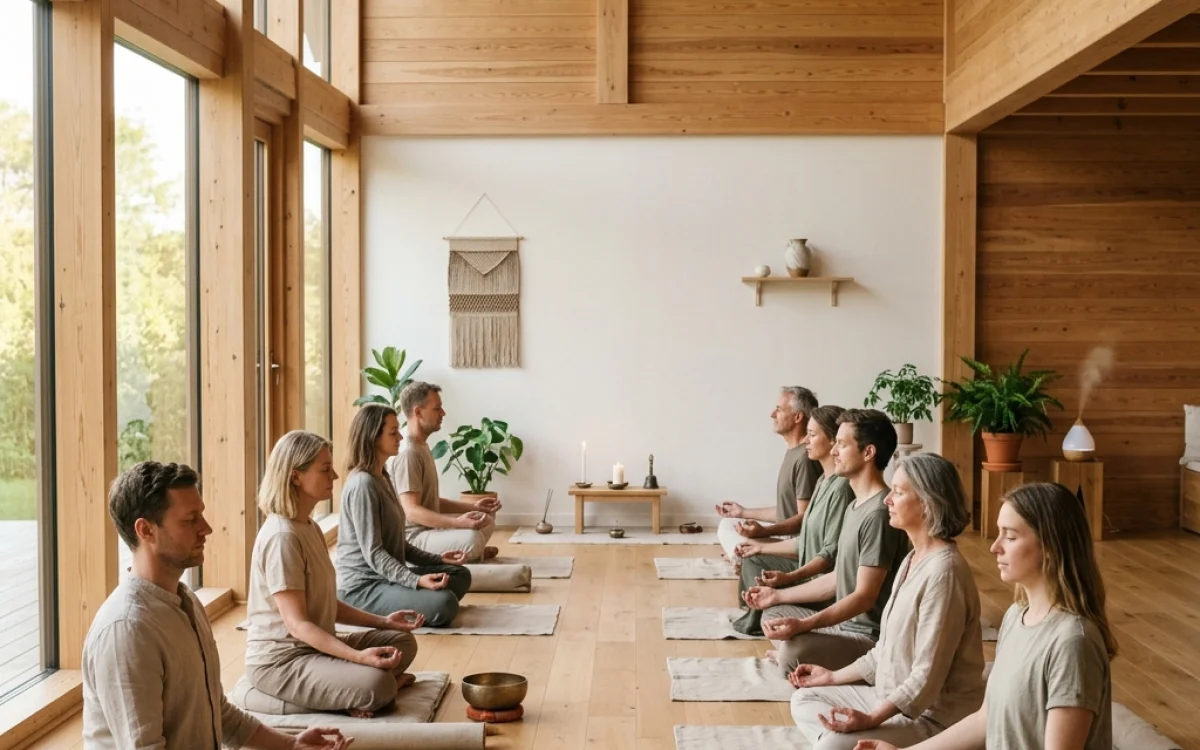
This is a guided meditation class: the instructor leads you step by step with their voice, which eases the worry of "am I doing it right?" The 30-minute class is open to all levels, in studio or online. The goal is not to stop your thoughts but to notice them and gently return to your focus.
Who is it for?
Beginners: Meditation for beginners is easier to learn in a guided format.
People with busy, stressful lives: A short class offers a mental break in the day.
Anyone who struggles to fall asleep: Body scans and breath-focused practices may help you relax.
Those who find it hard to focus: Bringing attention back again and again is trained as a skill.
People who cannot join physically demanding classes: Meditation needs no movement and can be done in a chair.
Anyone building a regular practice: Group support and guidance make the habit easier to keep.
What does it work in the body and mind?
The honest answer to which muscles meditation works: there is no significant muscle work. What it trains is attention, breath, and the nervous system:
Postural muscles (erector spinae and deep neck muscles): Stay lightly active to keep you upright.
Diaphragm (main breathing muscle): The breath often slows and deepens on its own.
Autonomic nervous system: Research links regular meditation with a reduced stress response and more parasympathetic (rest-and-digest) activity.
Attention networks: Noticing a wandering mind and bringing it back is the core rep that trains focus.
Interoception: Body scans build awareness of inner signals like breath, heartbeat, and tension.
Emotional awareness: You practice observing emotions without reacting.
Benefits
The benefits of meditation are among the most studied mind-body topics; effects usually become clearer with regular practice:
Stress management: Research links mindfulness-based programs with lower perceived stress.
Sleep: Meditating before bed can help slow the mind and ease you into sleep.
Focus: Regular practice may support sustained attention.
Emotional regulation: Noticing thoughts and feelings can create room for conscious choices instead of automatic reactions.
Anxiety: Some studies suggest meditation may help ease anxiety symptoms, but it is not a substitute for treatment.
Body awareness: You notice signs of tension and fatigue earlier.
Accessibility: No equipment or fitness level needed.
What happens in a class?
The 30-minute class starts by finding a comfortable seated or lying position and settling in. In the main part, the instructor guides you through a theme such as breath awareness, a body scan, or loving-kindness, and class ends with a short silence and a gentle return. Online, you simply follow the voice guidance.
Settling in (5 min): Adjusting your seat, dropping the shoulders, and a few calm breaths.
Breath focus (8 min): Counting or observing the breath.
Theme practice (12 min): Body scan, open awareness of sounds, or loving-kindness meditation.
Closing (5 min): Quiet sitting, small finger movements, and slowly opening the eyes.
Safety tips and things to watch
Choose a comfortable position: Cross-legged is optional; a chair, cushion, or lying down all work.
Do not ignore pain: If your legs go numb or your back aches, quietly change position.
Do not judge yourself: A wandering mind is normal; noticing and returning is the practice.
Eyes can stay open: If closing them feels uncomfortable, rest your gaze on the floor.
Mind your mental health: If you have a history of PTSD, severe depression, psychosis, or a serious anxiety disorder, talk to your doctor or a mental health professional first; intensive inward practices can sometimes bring up difficult feelings.
You can stop anytime: If something distressing comes up, open your eyes, press your feet into the floor, and tell the instructor.
Not a replacement for treatment: Meditation can complement medical or psychological care, not replace it.
How to prepare
Wear comfortable layers; keep a sweater or blanket nearby since you may get cold sitting still.
If joining online, find a quiet space, silence notifications, and use headphones.
Avoid a heavy meal right before class; arriving very hungry can also be distracting.
Support your seat with a cushion, block, or chair if needed.
Frequently asked questions
I cannot stop my thoughts. Is meditation for me?
Yes. Meditation is not about stopping thoughts but noticing them and gently bringing attention back. Everyone's mind wanders.
When will I feel the effects of meditation?
Some feel calmer after the first classes; research effects are usually linked to weeks of regular practice.
How many minutes a day should I meditate?
For beginners, 5–10 minutes a day is a good start. Combined with weekly guided classes, you can build up over time.
Is meditation a religious practice?
Although it has roots in religious traditions, in this class meditation is taught as an attention and awareness practice, independent of any belief system.
We use required cookies to keep the site working. With your permission, Google Analytics and YouTube help us measure site usage and display external media. Read our Cookie Policy.