Hi! Ask me about StudyONsende (features, packages, prices, setup) or about the demo studio in the live demo: its timetable, instructors and packages. For example: "What is included in the web + mobile package?"
Answered by AI and may be wrong; book on the class page. Your question is sent to Anthropic (USA) to generate the answer. So we can get back to you, the chat is shared with our team and stored; you can ask us to delete it. Sharing contact details is optional; do not share health details.
Privacy
A high-tempo and sweaty dynamic yoga practice offering strength, endurance, and flexibility together.
What is Power Yoga?
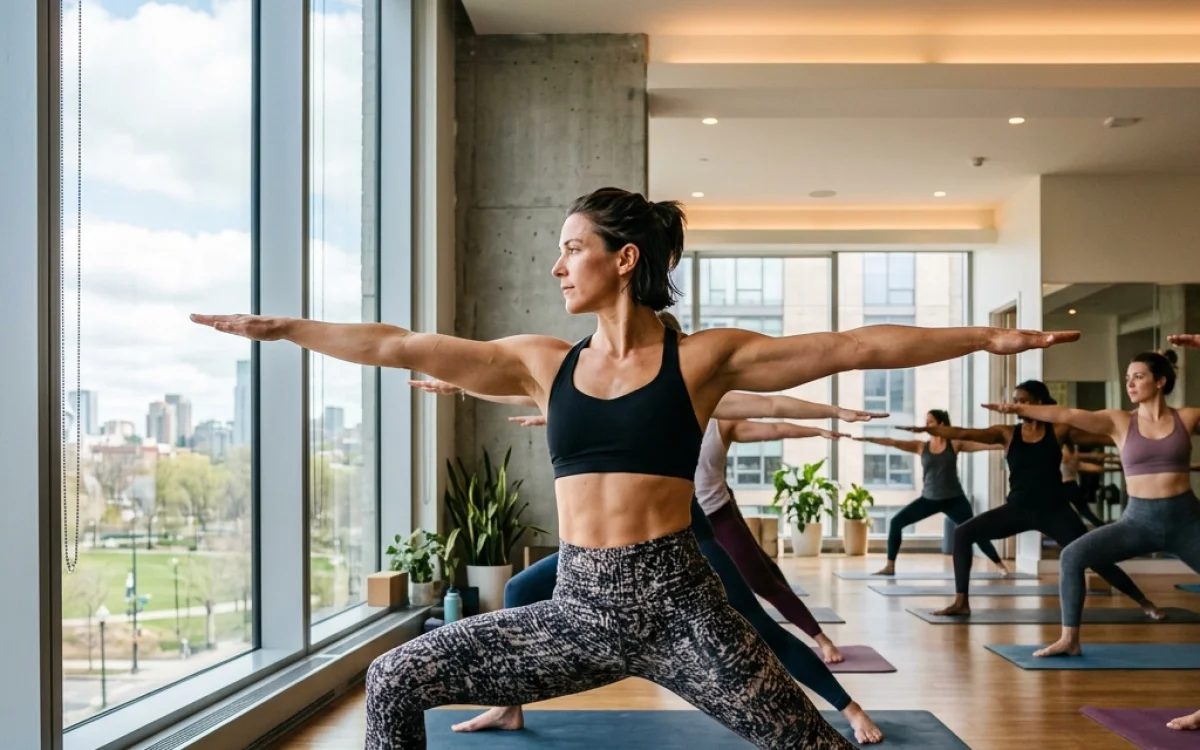
Power yoga is a fast-paced, athletic style of yoga that combines Vinyasa and Ashtanga-based flows with a focus on strength and endurance. It was developed in the United States in the 1990s by teachers who wanted to make Ashtanga accessible to people with a fitness background. There is no fixed series; each class follows a different sequence.
Poses are linked with the breath, but some are held longer to challenge muscular endurance. Plank variations, chair and warrior poses, arm balances, and core work appear often. This is an advanced class that requires a solid yoga foundation and good fitness.
Who is it for?
Advanced students: Comfortable with chaturanga, downward-facing dog, and basic arm balances.
People wanting an athletic practice: If you also see yoga as strength and conditioning.
Athletes: A way to complement strength training with mobility, balance, and core control.
Vinyasa practitioners ready for more: Longer holds and a more intense pace.
Anyone who loves to sweat: Leave class tired but energized.
A note for beginners: Build your basics and breathing in Hatha and Vinyasa classes before moving to Power yoga.
Which muscles does it work?
Which muscles does Power yoga work? This bodyweight practice works the major load-bearing muscle groups especially hard.
Rectus abdominis, obliques, and transversus abdominis (abs, side abs, and deep core): Constantly engaged in plank variations and core sequences.
Quadriceps and gluteus maximus (front thighs and glutes): Strengthened by long holds in chair, warrior, and lunge poses.
Gluteus medius (side hip): Stabilizes the hip and knee in one-legged balances.
Pectoralis major and triceps (chest and back of the arms): Work in chaturanga and push-up variations.
Deltoids and serratus anterior (shoulders and shoulder blade area): Support you in arm balances and downward dog.
Erector spinae (back muscles): Support the spine in locust and backbends.
Benefits
Key benefits of Power yoga with regular practice:
Muscle strength: Long holds and repeated transitions may help build strength throughout the body.
Cardiovascular fitness: The brisk flow can raise your heart rate.
Core stability: A strong center supports control in daily movement and other sports.
Flexibility: Dynamic stretching alongside strength work helps maintain range of motion.
Mental resilience: Staying calm and breathing through challenging poses builds focus.
Stress management: Research associates regular physical activity and yoga with lower perceived stress.
What happens in a class?
A 60-minute Power yoga class starts with a quick warm-up, peaks with a strength-focused main flow, and closes with stretching and rest. The instructor offers options for pace and intensity.
Warm-up (10 minutes): Breath, dynamic spinal movement, and sun salutations.
Main flow (35 minutes): Standing strength sequences, long holds in chair and warrior poses, balances, and arm balance practice.
Core section (5 minutes): A short abdominal and back sequence.
Cool-down and closing (10 minutes): Hip and leg stretches, then savasana.
Safety tips and things to watch
Form comes first: If fatigue affects your alignment, choose a lighter version of the pose.
Don't hold your breath: Holding your breath during effort can raise blood pressure; keep it flowing.
Protect shoulders and wrists: Spread weight evenly through your palms and keep elbows close in chaturanga.
Knees over ankles: In lunges and chair pose, don't let your knees collapse inward.
Resting is always an option: You can take child's pose at any time.
Check with your doctor first: If you have cardiovascular disease, high blood pressure, a shoulder, wrist, or lower back injury, recent surgery, or are pregnant, talk to your doctor before starting.
Tell your instructor: Share any injuries or pain before class.
How to prepare
Clothing: Fitted, moisture-wicking clothes and a top that stays put in arm balances and inversions.
Food: Finish heavy meals 2 hours before; a light snack an hour before if needed.
Water and towel: Expect to sweat; bring both and stay hydrated during the day.
Mat: Choose a non-slip mat with good grip.
Frequently asked questions
Is Power yoga good for beginners?
This class is advanced. If you're new to yoga, learn the basic poses, breathing, and chaturanga technique in Hatha and Vinyasa classes first.
Can Power yoga help with weight loss?
Because it is brisk and strength-focused, Power yoga can increase energy expenditure compared with calmer styles. Weight management still depends on nutrition, sleep, and overall activity.
What is the difference between Power yoga and Vinyasa?
Both are flow-based. Power yoga emphasizes strength and endurance with longer holds and a more athletic pace, while Vinyasa focuses more on fluidity and linking breath with movement.
Can Power yoga replace weight training?
Power yoga offers effective bodyweight strength training, but it doesn't provide the same stimulus as lifting heavy loads. The two complement each other well.
Share
Upcoming Sessions
17 November 2026 - 20:30
Instructor: Derin Yıldız
| Cihangir (Şanti Salonu)
We use required cookies to keep the site working. With your permission, Google Analytics and YouTube help us measure site usage and display external media. Read our Cookie Policy.