Hi! Ask me about StudyONsende (features, packages, prices, setup) or about the demo studio in the live demo: its timetable, instructors and packages. For example: "What is included in the web + mobile package?"
Answered by AI and may be wrong; book on the class page. Your question is sent to Anthropic (USA) to generate the answer. So we can get back to you, the chat is shared with our team and stored; you can ask us to delete it. Sharing contact details is optional; do not share health details.
Privacy
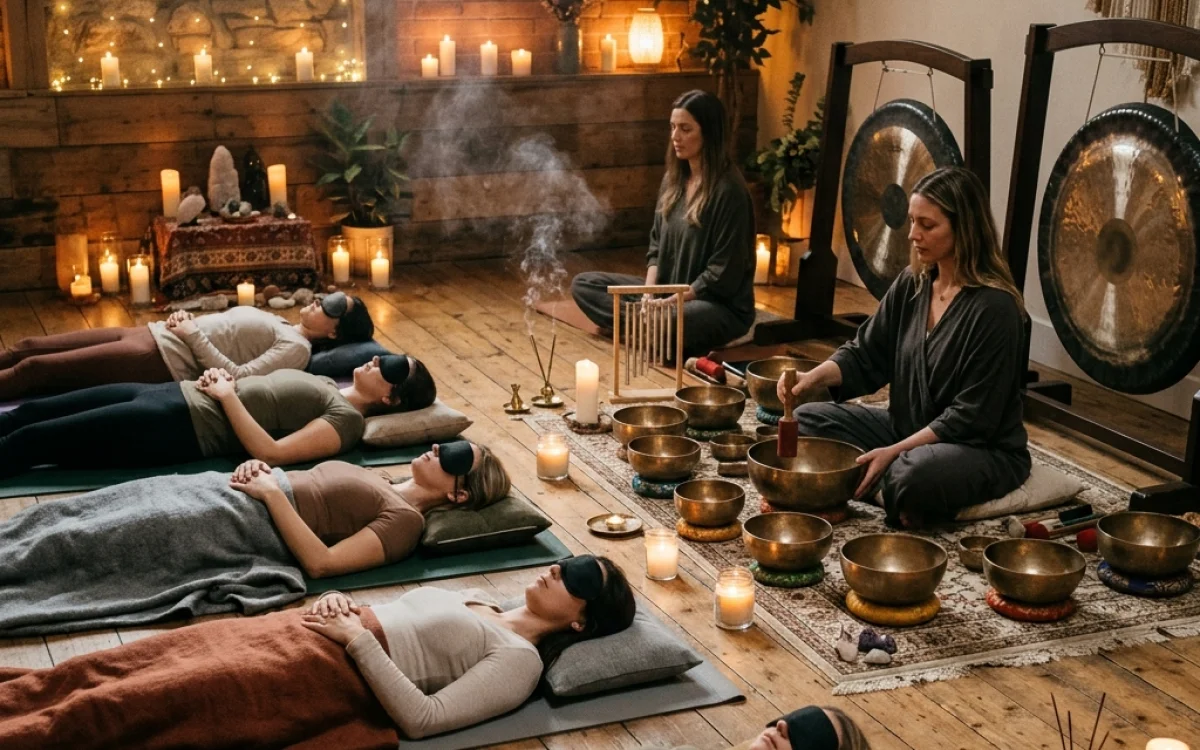
Deep mental and cellular relaxation with the meditative vibrations of crystal bowls, gongs, and acoustic instruments.
What is a sound bath?
A sound bath is a relaxation and listening experience in which participants lie down and rest while long, layered sounds from singing bowls, gongs, and similar instruments fill the room. The word "bath" refers not to water but to sound surrounding you from every direction.
The practice is inspired by sound and ritual traditions from various cultures and is now mostly offered as a meditative way to rest. All you need to do is lie down comfortably and give your attention to the sounds. The 60-minute class is open to all levels and takes place in the studio. Scientific evidence on sound baths is still limited, so it is best seen as a relaxation and attention experience, not a treatment.
Who is it for?
Anyone looking for a deep rest: No movement needed; you lie down for the whole class.
Meditation beginners: For some, focusing on sound is easier than silent meditation.
People coming off a busy, stressful week: It offers space to slow the mind.
Those who cannot join physically demanding classes: Suitable for all ages and fitness levels.
Anyone open to new experiences: A sound bath for beginners requires no prior knowledge.
Yoga practitioners seeking balance: A good complement to more active classes.
What does it work in the body and mind?
A sound bath is not a workout; muscles are not trained here but released. Its focus is listening, attention, and relaxation:
Postural muscles (back, neck, and shoulders): A supported lying position gives them a chance to let go of tension carried all day.
Diaphragm (main breathing muscle): Lying down, the breath often slows and deepens on its own.
Autonomic nervous system: A few small studies show participants report less tension and a calmer mood after sound meditation; how much is due to the sound itself versus simply resting is unclear.
Auditory attention: Following each sound as it begins, shifts, and fades brings attention into the present.
Body awareness: Low gong tones may create a sense of vibration in the body for some people; this varies widely.
Benefits
Research on the benefits of a sound bath is scarce and small in scale. These are experiences participants often report, not outcomes everyone will have:
Relaxation: Many people say they feel more relaxed afterward.
Perceived stress: It may help ease feelings of tension in the short term.
Mental break: Uninterrupted rest away from screens and to-do lists.
Attention practice: Focusing on sound is an easy entry into meditative attention.
Winding down before sleep: After evening classes, some people report sleeping more easily.
Emotional space: A quiet, safe setting can allow you to connect with your feelings.
What happens in a class?
The 60-minute class starts with setting up your mat and props. After a short breathing and relaxation cue from the instructor comes a long sound section with bowls and gong, and class closes as the sounds fade into silence.
Settling in (10 min): Mat, pillow, eye pillow, and blanket for a comfortable position.
Breath and body scan (5 min): Verbal guidance to relax the body.
Sound journey (35 min): Layered sounds from singing bowls, gong, and other instruments.
Closing (10 min): Silence, slow movement, and rolling to your side before sitting up.
Safety tips and things to watch
Prioritize comfort: If lying on your back is uncomfortable, lie on your side, support your knees, or sit up.
Sound sensitivity: If you have tinnitus, hearing sensitivity, or sound-triggered discomfort, tell the instructor; you can rest farther from the instruments.
Check with your doctor first: With epilepsy, a pacemaker, a serious psychiatric condition, or pregnancy, talk to your doctor before joining.
During pregnancy: Do not lie on your back for long; use side-lying and props.
Get up slowly: Standing up suddenly after deep relaxation can cause dizziness; roll to your side first.
Emotions are normal: Feelings may come up for some people; you can always open your eyes or step out.
Not a replacement for treatment: A sound bath does not replace medical or psychological care.
How to prepare
Wear comfortable layers; you may get cold lying still for a long time.
Bring your own blanket or eye pillow if you like, and arrive early to settle in.
Avoid a heavy meal right before; skipping caffeine may also make it easier to relax.
Silence your phone and remove jewelry that might make noise.
Frequently asked questions
Is a sound bath scientifically proven?
The evidence is still limited. Small studies show participants report feeling more relaxed, but it is best seen as a relaxation experience, not a treatment.
Is it okay if I fall asleep?
Yes, it is very common. Falling asleep may simply show that your body needs rest.
What is the difference between a sound bath and meditation?
Meditation usually focuses on the breath or body sensations; a sound bath focuses on sound, which some find an easier start.
How often should I attend?
There is no set rule; many people come weekly or every other week. Try a few rhythms to find what feels right for you.
We use required cookies to keep the site working. With your permission, Google Analytics and YouTube help us measure site usage and display external media. Read our Cookie Policy.