Hi! Ask me about StudyONsende (features, packages, prices, setup) or about the demo studio in the live demo: its timetable, instructors and packages. For example: "What is included in the web + mobile package?"
Answered by AI and may be wrong; book on the class page. Your question is sent to Anthropic (USA) to generate the answer. So we can get back to you, the chat is shared with our team and stored; you can ask us to delete it. Sharing contact details is optional; do not share health details.
Privacy
Elevate your energy with dynamic and fluid sequences synchronized with your breath.
What is Vinyasa Flow?
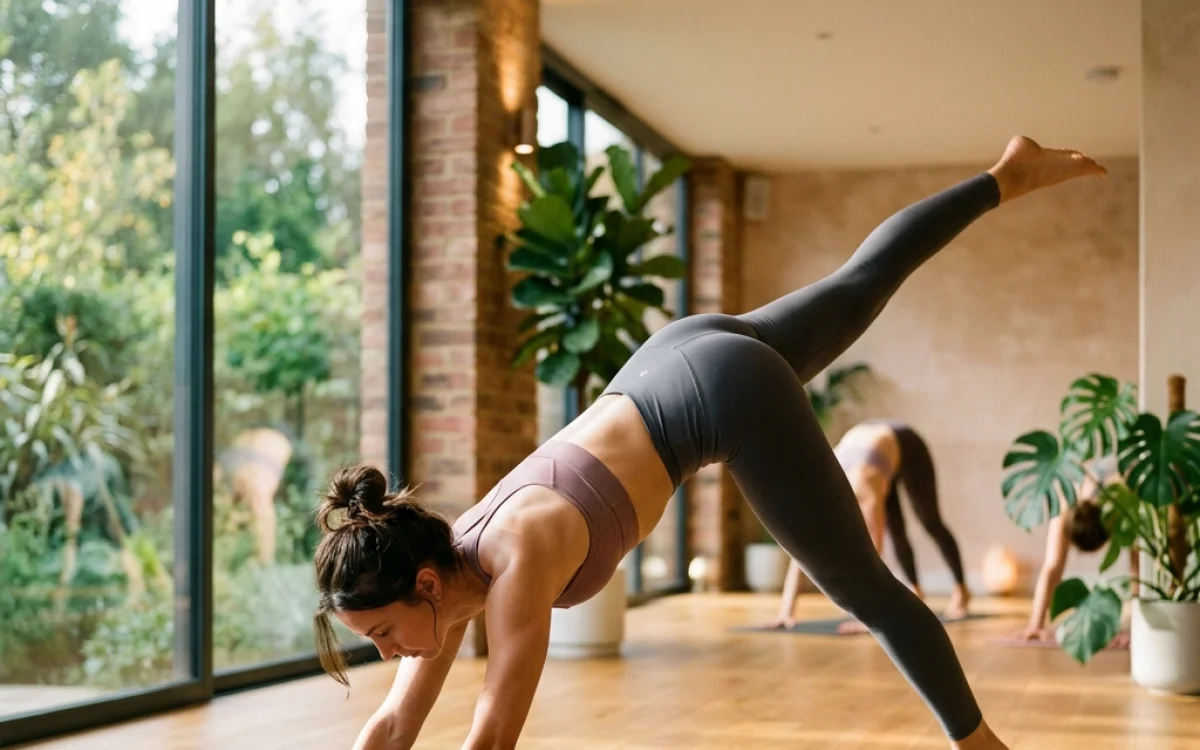
Vinyasa Flow is a dynamic style of yoga in which postures are linked into a fluid sequence, with each movement synchronized to the breath. "Vinyasa" roughly means "to place in a special way" in Sanskrit and describes connected, breath-led movement. It grew out of the Ashtanga tradition, but instead of a fixed series, each class follows a different sequence.
Sun salutations, standing poses, balances, and transitions move in a continuous rhythm, with the breath acting as a metronome. Because the practice demands strength, flexibility, and cardiovascular endurance, the class is designed for intermediate students who already know the basic poses.
Who is it for?
Students who know the basics: Intermediate practitioners familiar with downward-facing dog, the warrior poses, and chaturanga.
People who like to move: If you prefer flowing over holding one pose for a long time.
Anyone building strength and flexibility together: Both are trained in a single class.
Busy minds: Continuous movement and breath focus can help bring attention to the present moment.
Athletes: Great for mobility, coordination, and core control.
A note for beginners: If you're new to yoga, a few Hatha or foundational classes first will make your transition to Vinyasa safer.
Which muscles does it work?
Which muscles does Vinyasa Flow work? The flow uses the whole body, but some areas work especially hard.
Pectoralis major and triceps brachii (chest and back of the arms): Lower the body with control in chaturanga.
Serratus anterior and deltoids (shoulder blade area and shoulders): Stabilize the shoulder joint in plank and downward dog.
Transversus abdominis and obliques (deep and side abs): Stabilize the torso in transitions and engage in twists.
Quadriceps and gluteus maximus (front thighs and glutes): Provide support in chair and warrior poses.
Hamstrings and gastrocnemius (back thighs and calves): Stretch in forward folds and downward dog.
Diaphragm (main breathing muscle): Works steadily with ujjayi breathing.
Benefits
Key benefits of Vinyasa Flow with regular practice:
Strength: Bodyweight transitions may help build upper body and core strength.
Flexibility and mobility: Dynamic stretching supports joint range of motion.
Cardiovascular endurance: The continuous flow can raise your heart rate moderately.
Coordination: Matching breath and movement improves body control.
Focus: Breath-led flow can feel like a moving meditation.
Stress management: Research associates regular yoga practice with lower perceived stress.
Variety: A different sequence each class keeps practice motivating.
What happens in a class?
A 60-minute Vinyasa Flow class starts with a warming opening, builds toward peak poses, and ends with a calm close. The instructor guides the flow with breath cues.
Opening (5 minutes): Settling into ujjayi breath and setting an intention.
Warm-up (10–15 minutes): Sun salutations A and B.
Main flow (25–30 minutes): Standing poses, balances, twists, and a peak pose based on the class theme (such as an arm balance or backbend).
Cool-down and closing (10 minutes): Floor stretches, hip openers, and savasana.
Safety tips and things to watch
Learn chaturanga properly: Keep elbows close to your body and shoulders no lower than elbow height. Drop your knees when needed.
Control over speed: Don't sacrifice alignment to keep up; if you miss a breath, pause and rejoin.
Let your breath guide you: If it becomes short or rushed, rest in child's pose.
Protect your wrists: Spread weight evenly through your palms; use forearm variations if your wrists hurt.
Mind your lower back in backbends: Initiate from the upper back and avoid compressing the lumbar spine.
Check with your doctor first: If you have cardiovascular disease, uncontrolled high blood pressure, a shoulder or back injury, recent surgery, or are pregnant, talk to your doctor before starting.
Tell your instructor: Share any injuries or pain before class.
How to prepare
Clothing: Fitted, sweat-friendly clothes and a top that stays put when you're upside down.
Food: Avoid heavy meals for at least 2 hours before class; an empty stomach makes flowing more comfortable.
Water and towel: Vinyasa can make you sweat, so bring water and a small towel.
Mat: Choose a non-slip mat; a towel on top can help with grip if your hands get sweaty.
Frequently asked questions
Is Vinyasa Flow good for beginners?
This class is designed for intermediate students. If you're new to yoga, spend a few weeks learning the poses in Hatha or foundational classes first; moving into Vinyasa will then feel much more enjoyable.
Can Vinyasa Flow help with weight loss?
Because you move continuously, Vinyasa may use more energy than calmer yoga styles. Weight management still depends on nutrition, sleep, and overall activity; Vinyasa can be one supportive part of that picture.
What is the difference between Vinyasa and Ashtanga?
Ashtanga follows the same fixed series in the same order every class. Vinyasa Flow uses Ashtanga's breath-movement principle, but the instructor creates a different sequence each time.
How often should I practice?
Two to three Vinyasa classes a week, balanced with a calmer yin or restorative practice, is a good start. Giving your body time to recover is part of the practice too.
Share
Upcoming Sessions
17 November 2026 - 10:00
Instructor: Derin Yıldız
| Beşiktaş (Güneş Salonu)
We use required cookies to keep the site working. With your permission, Google Analytics and YouTube help us measure site usage and display external media. Read our Cookie Policy.