Hi! Ask me about StudyONsende (features, packages, prices, setup) or about the demo studio in the live demo: its timetable, instructors and packages. For example: "What is included in the web + mobile package?"
Answered by AI and may be wrong; book on the class page. Your question is sent to Anthropic (USA) to generate the answer. So we can get back to you, the chat is shared with our team and stored; you can ask us to delete it. Sharing contact details is optional; do not share health details.
Privacy
Exercises that strengthen abdominal and back muscles (core), correct postural imbalances, and improve balance.
What is Pilates?
Pilates is an exercise method that focuses on strengthening the deep muscles of the torso, improving posture and building body awareness through controlled movement coordinated with the breath. Joseph Pilates developed it in the early 20th century and called it "Contrology." It rests on the principles of centering, control, concentration, flow, precision and breath.
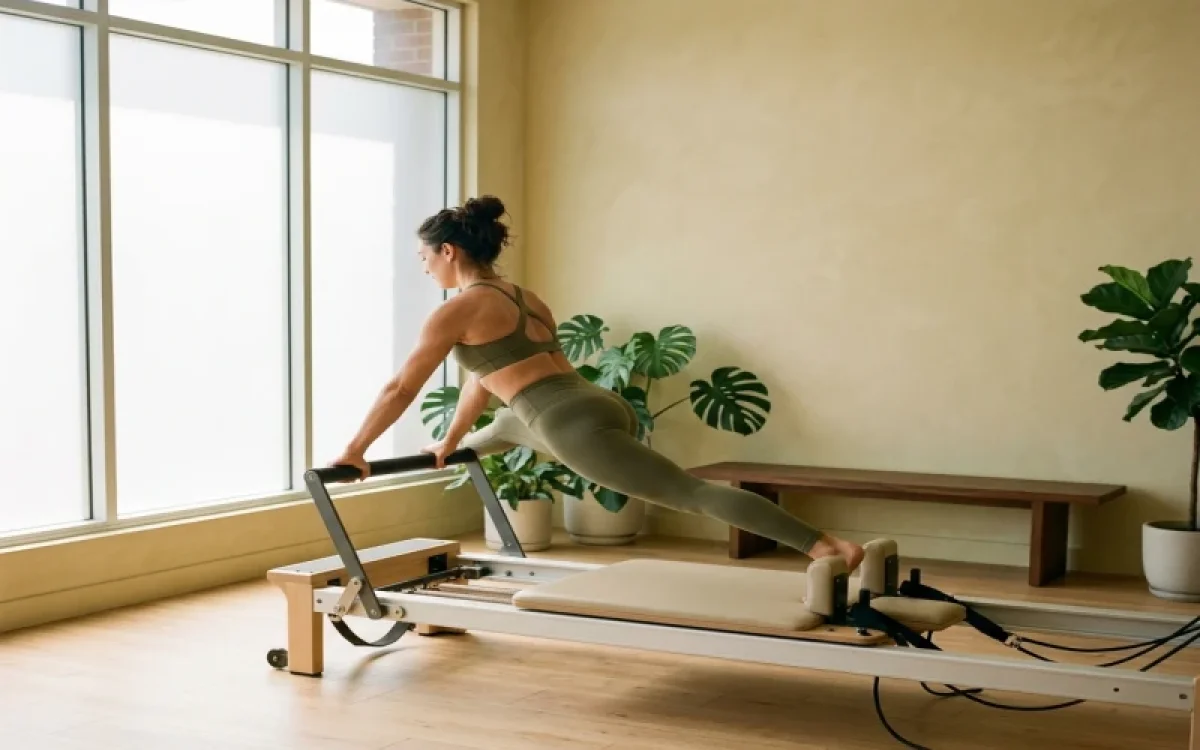
This class is mat-based: unlike reformer Pilates, your own body weight provides the resistance, with a small ball, resistance band or ring added when useful. The focus isn't high reps but doing each movement precisely and with control. Pilates suits all levels, and Pilates for beginners progresses step by step, starting with basic breathing and spinal alignment.
Who is it for?
People who want better posture: Balanced work for the back and torso supports an upright posture.
Desk workers: Builds awareness of the lower back and neck tension that long sitting brings.
Anyone building core strength: Focuses on the deep abdominal and back muscles.
People who want to go easy on their joints: A low-impact workout with no jumping.
Athletes looking for support: May improve core stability for running, swimming or dance.
Beginners: An easier version of every exercise is shown.
Which muscles does it work?
Pilates works the whole area known as the "powerhouse":
Transversus abdominis (deep core): Acts like an inner corset that supports the belly in every movement.
Rectus abdominis and obliques (abs and side abs): Get stronger in the hundred, roll up and criss-cross.
Multifidus and erector spinae (spinal and back muscles): Support the spine in back exercises like swan and swimming.
Pelvic floor muscles: Engage with the breath to help stabilize the torso.
Gluteus maximus and medius (glutes): Work in bridges and side-lying leg series.
Serratus anterior and lower trapezius (around the shoulder blades): Help keep the shoulders in good position.
Benefits
The benefits of Pilates can start to show within a few weeks of regular practice:
A stronger core: Deep abdominal and back muscles get stronger.
Posture support: Awareness of spinal alignment may support better posture.
Flexibility and mobility: Controlled stretching contributes to hip and spinal mobility.
Back health: Research links Pilates with improvements in pain and function in chronic low back pain.
Balance and coordination: Precise, controlled movements improve coordination.
Breath awareness: Breathing in rhythm with movement supports core control and focus.
Low impact: Build strength without heavy load on the joints.
What happens in a class?
A 55-minute mat Pilates class starts with breathing and spinal alignment, moves into a core-focused main sequence, and ends with stretching.
Warm-up (10 minutes): Pilates breathing, neutral spine, pelvic tilts and shoulder movements.
Main sequence (35 minutes): Classic exercises such as the hundred, roll up, single leg circles, bridge, side-lying leg series and swimming.
Cool-down (10 minutes): Spine and hip stretches and a short relaxation.
Safety tips and things to watch
Quality beats quantity: When your form slips, stop or switch to the easier version.
Protect your neck: If your neck strains when lifting your head, rest it down or support it with your hands.
Keep your lower back grounded: If your back arches during leg work, keep your legs higher.
Don't hold your breath: Keep breathing out as you move.
Pregnancy and postpartum: During pregnancy and after giving birth (especially with abdominal separation), check with your doctor before starting and let the teacher know.
Health conditions: With a herniated disc in the back or neck, osteoporosis or recent surgery, talk to your doctor first; some forward bends and curls may need to be modified.
How to prepare
Clothing: Fitted, comfortable clothes so the teacher can see your alignment.
Feet: Barefoot or in non-slip socks.
What to bring: Water and a small towel.
Eating: Because of the core work, have a light meal 1.5 to 2 hours before class.
Frequently asked questions
What's the difference between Pilates and yoga?
Both value breath and body awareness. Yoga offers a wider range of stretching, balance and meditation, while Pilates concentrates on core strength, posture and controlled movement.
Can Pilates help with weight loss?
Mat Pilates is a moderate-intensity workout that builds strength. It isn't the key to weight loss on its own, but together with regular movement and balanced eating it can support body composition and posture.
How often should I do Pilates?
Two to three classes a week is a good frequency to feel progress. If you're just starting, begin with two classes a week and give your body time to adapt.
I have lower back pain. Can I do Pilates?
Pilates can support back health for many people, but the cause of the pain matters. Talk to your doctor first and tell the teacher about your situation so exercises can be adapted for you.
We use required cookies to keep the site working. With your permission, Google Analytics and YouTube help us measure site usage and display external media. Read our Cookie Policy.